Zambia Waste Incinerator Market Research Report: Demand, Trends, and Equipment Adaptation

Zambia is in the middle of a long-term transition in how it handles solid and medical waste. Rapid urbanization in Lusaka, Ndola, Kitwe, and Livingstone, combined with growing health-care capacity, is putting pressure on old disposal practices such as open dumping and uncontrolled burning. At the same time, regulations and donor-supported projects are pushing hospitals, councils, and private operators toward safer, engineered solutions, including properly designed waste incinerators. (dspace.unza.zm)

This report gives an overview of the waste incinerator market in Zambia, focusing on market characteristics, demand trends, technology fit, and the suitability of robust incinerator solutions such as HICLOVER systems for Zambian conditions.
1. Market Background in Zambia
In Lusaka, Ndola, Kitwe, and Kabwe, solid waste volumes are rising due to population growth, commercial activity, and infrastructure expansion. Studies in urban areas such as Kitwe show that conventional municipal services struggle to collect and properly dispose of all refuse; a significant portion of waste still ends up in informal pits, illegal dumps, or is burned in the open. (Unicaf)
Key drivers shaping the Zambian waste treatment market:

-
Urbanization and density in Lusaka, Kitwe, Ndola, and Chingola
-
Expansion of hospitals and clinics, especially in Lusaka and provincial capitals
-
Donor- and government-funded health projects introducing stricter standards for health-care waste
-
Public pressure for cleaner cities and reduction of illegal dumps
For medical and hazardous waste, the situation is particularly sensitive. The National Health-Care Waste Management Plan highlights challenges in handling, storage, transport, treatment, and final disposal of health-care waste across Zambia, and calls for appropriate treatment technologies at health facility level. (dspace.unza.zm)
2. Market Segments for Waste Incinerators
In Zambia, demand for waste incinerators is not limited to large hospitals in Lusaka. Several distinct buyer groups can be observed:
-
Public and mission hospitals
-
University Teaching Hospital in Lusaka and provincial hospitals in Ndola, Kitwe, Chipata, and Livingstone generate large quantities of infectious and pathological waste.
-
They need medium- to high-capacity medical waste incinerators with secondary combustion and basic emissions control.
-
-
District hospitals and rural health centers
-
Facilities in districts such as Mongu, Mansa, Kasama, and Solwezi often lack engineered treatment equipment.
-
Small and compact incinerators that can handle 10C50 kg/hour of medical waste are in demand, especially units that are easy to operate and maintain.
-
-
Private hospitals, clinics, and laboratories
-
Growing private health facilities in Lusaka and Copperbelt cities require on-site or shared incineration solutions to avoid reliance on informal disposal.
-
-
Industrial and agricultural operators
-
Abattoirs, poultry farms, and food-processing plants across Zambia generate animal by-products and contaminated waste that need controlled destruction.
-
-
Border posts, customs, and enforcement agencies
-
At border points near Kasumbalesa, Nakonde, and Chirundu, there is need for incinerators to destroy seized or rejected goods, expired food products, and sometimes pharmaceuticals.
-
3. Demand Trends and Regulatory Context
Regulatory developments are a strong underlying driver. Zambia has health-care waste management guidelines aligned with environmental regulations under the Zambia Environmental Management Agency (ZEMA). These frameworks aim to ensure that hazardous health-care waste is treated in a way that minimizes risks to human health and the environment, and they encourage technologies that reduce uncontrolled emissions. (dspace.unza.zm)
Major demand trends include:

-
Shift from open burning to engineered incinerators
Facilities in Lusaka and Kitwe are gradually replacing crude burn pits and oil-drum incinerators with properly designed units that reach higher temperatures and have secondary chambers. -
Preference for simple, robust technology
Many hospitals in Ndola or Livingstone prefer diesel-fired or LPG-fired batch incinerators with manual loading and straightforward controls, rather than very complex systems that are difficult to maintain. -
Growing interest in containerized and mobile systems
Provincial health offices and NGOs operating in rural Zambia appreciate containerized and trailer-mounted incinerators that can be deployed quickly for projects or emergency operations and later relocated if needed. -
Attention to emissions and community acceptance
Complaints about smoke and odor around health facilities in Lusaka or Ndola are prompting decision-makers to look for units with better combustion control and, where budgets allow, basic flue-gas treatment.
4. Technology Fit: What Kind of Incinerators Work in Zambia?
Zambia’s conditions C variable power supply, high dust environments, and limited service infrastructure in smaller towns C influence the type of equipment that is practical. Successful incinerators for Lusaka, Ndola, and regional centers tend to share several characteristics:
-
High-temperature primary chamber for safe destruction of infectious and mixed waste
-
Secondary combustion chamber with a defined residence time to reduce smoke and odor
-
Refractory lining and insulation designed for frequent cycling and long service life
-
Fuel flexibility, often diesel or LPG, since natural gas is not widely available
-
Straightforward control systems with temperature indication and basic interlocks
-
Compact layout that can be placed in limited space within a hospital compound
For smaller towns like Kasama, Mansa, or Choma, batch-type incinerators in the 20C100 kg/hour range are often sufficient. For major urban hospitals in Lusaka, Ndola, or Kitwe, higher-capacity units (150C300 kg/hour or more) may be required, sometimes in a centralized treatment model where one incinerator serves multiple facilities.
5. HICLOVER Incinerators and Their Suitability for Zambia
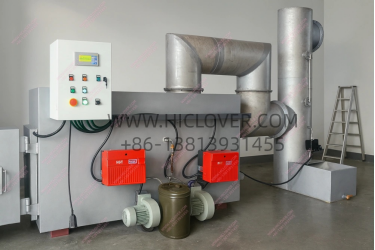
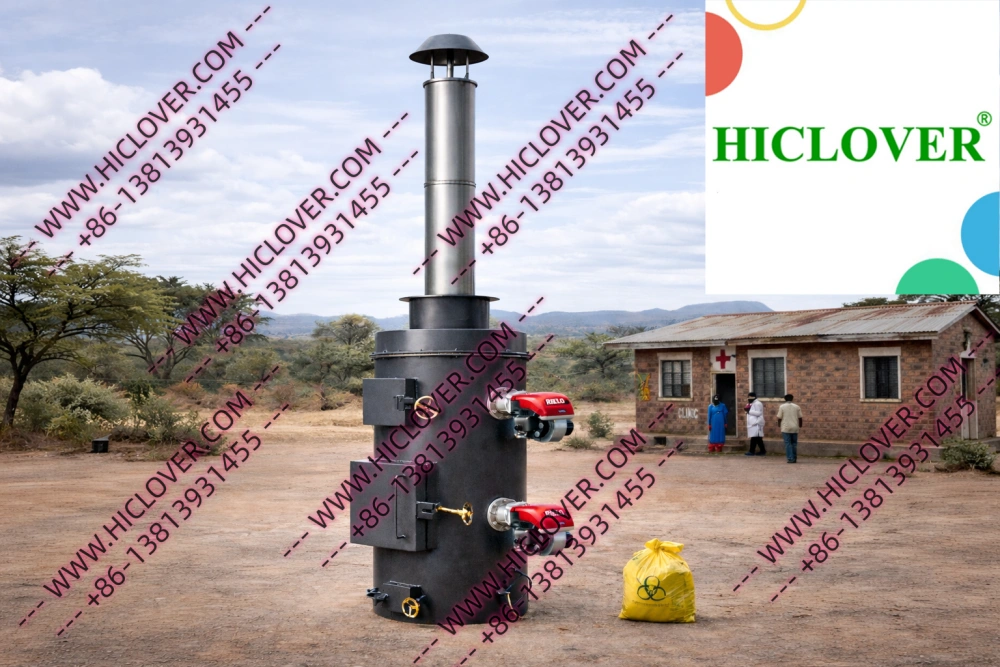
HICLOVER provides a family of medical and solid waste incinerators that align well with the technical and operational realities in Zambia. The brand has supplied systems to a range of developing-country markets and international organizations, making its product line relevant for hospitals and institutions in Lusaka, Ndola, and other Zambian cities.
Key features of HICLOVER equipment that match Zambia’s needs:
-
Wide capacity range
From compact units for rural health posts and mission hospitals to larger systems suitable for university or provincial hospitals. This allows provincial offices to standardize on a few models while serving different waste volumes. -
Top-loading and side-loading options
-
Top-loading designs are ideal for bulky medical bags and general solid waste.
-
Side-loading doors suit heavier containers and animal by-products.
-
-
Secondary combustion and better burnout
HICLOVER units typically include a secondary chamber for complete combustion of flue gases, improving odor control C an important concern in densely populated parts of Lusaka or Kitwe. -
Containerized and mobile variants
Containerized HICLOVER incinerators can be shipped and installed as “plug-and-run” units. For example, a 20-foot container-based unit could serve a provincial hospital in Livingstone or Ndola with minimal civil works, mainly flue installation and fuel connection. -
Adaptable fuel systems
Diesel and LPG burners allow easy integration into existing fuel supply chains used for generators and boilers in many Zambian facilities. -
Simple, durable construction
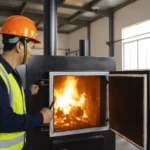
The focus on heavy-duty steel shells, robust refractory lining, and uncomplicated controls makes HICLOVER systems easier to own and operate in regions where specialized technical support is limited.
6. Highlight Theme: Decentralized Health-Care Waste Treatment for Provincial Zambia
One practical theme for Zambia is the move toward decentralized health-care waste treatment. Instead of relying only on large incinerators in Lusaka, more provincial and district-level facilities in places like Ndola, Kitwe, Chipata, and Livingstone are seeking their own equipment.
A decentralized approach has several benefits:
-
Reduces the need to transport infectious waste over long distances on poor roads
-
Lowers the risk of accidental spillage and informal scavenging during transport
-
Allows each district hospital to manage its own waste cycle, from segregation to final destruction
-
Improves resilience during outbreaks or emergencies, when waste volumes spike in multiple locations at the same time
HICLOVER’s range of small and mid-sized medical waste incinerators fits naturally into this strategy. A health authority or NGO in Zambia can standardize on a few models and roll them out to district hospitals in the Copperbelt, Eastern, Northern, and Southern Provinces. Containerized units can be installed quickly in busy hospitals in Lusaka and Ndola, while smaller skid-mounted units can support remote facilities.
7. Market Outlook for Incinerators in Zambia
Looking ahead, several factors point to continued demand for reliable waste incinerators in Zambia:
-
Ongoing implementation of national health-care waste management plans and local by-laws in cities such as Lusaka and Kitwe
-
Increased awareness about infection risks among health workers and communities
-
Steady expansion of public and private health-care infrastructure
-
Interest from development partners in funding safer health-care waste treatment technologies (undpinzambia.exposure.co)
For suppliers, the most promising opportunities lie in:
-
Turnkey packages for new hospitals in Lusaka, Ndola, and provincial capitals
-
Upgrades of existing facilities, replacing old brick incinerators or open pits
-
Mobile and containerized units for projects in mining towns, border posts, and emergency operations
In this environment, incinerator systems that combine practical design, robust construction, and straightforward operation―such as HICLOVER’s medical and solid waste incinerators―are well positioned to become a standard choice for Zambian institutions seeking a reliable, long-term waste treatment solution.
2025-12-11/01:02:12
|
Incinerator Items/Model |
HICLOVER TS100(PLC)
|
|
Burn Rate (Average) |
100kg/hour |
|
Feed Capacity(Average) |
150kg/feeding |
|
Control Mode |
PLC Automatic |
|
Intelligent Sensor |
Continuously Feeding with Worker Protection |
|
High Temperature Retention(HTR) |
Yes (Adjustable) |
|
Intelligent Save Fuel Function |
Yes |
|
Primary Combustion Chamber |
1200Liters(1.2m3) |
|
Internal Dimensions |
120x100x100cm |
|
Secondary Chamber |
600L |
|
Smoke Filter Chamber |
Yes |
|
Feed Mode |
Manual |
|
Burner Type |
Italy Brand |
|
Temperature Monitor |
Yes |
|
Temperature Thermometer |
Corundum Probe Tube, 1400℃Rate. |
|
Temperature Protection |
Yes |
|
Automatic Cooling |
Yes |
|
Automatic False Alarm |
Yes |
|
Automatic Protection Operator(APO) |
Yes |
|
Time Setting |
Yes |
|
Progress Display Bar |
3.7 in” LCD Screen |
|
Oil Tank |
200L |
|
Chimney Type |
Stainless Steel 304 |
|
1st. Chamber Temperature |
800℃–1000℃ |
|
2nd. Chamber Temperature |
1000℃-1300℃ |
|
Residency Time |
2.0 Sec. |
|
Gross Weight |
7000kg |
|
External Dimensions |
270x170x190cm(Incinerator Main Body) |
|
Burner operation |
Automatic On/Off |
|
Dry Scrubber |
Optional |
|
Wet Scrubber |
Optional |
|
Top Loading Door |
Optional |
|
Asbestos Mercury Material |
None |
|
Heat Heart Technology(HHT) |
Optional |
|
Dual Fuel Type(Oil&Gas) |
Optional |
|
Dual Control Mode(Manual/Automatic) |
Optional |
|
Temperature Record |
Optional |
|
Enhanced Temperature Thermometer |
Optional |
|
Incinerator Operator PPE Kits |
Optional |
|
Backup Spare Parts Kits |
Optional |
|
Mobile Type |
Optional:Containerized/Trailer/Sledge Optional |