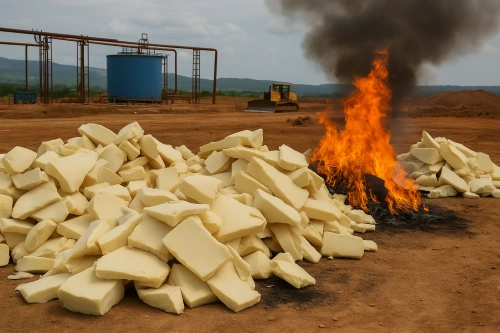
Need for Biohazard Incineration in South Sudan

South Sudan’s health system is still recovering from years of conflict and under-investment. Many hospitals, laboratories, UN compounds, and humanitarian field facilities generate infectious and biological waste but lack robust treatment infrastructure. Assessments for the Ministry of Health and partners have repeatedly highlighted gaps in medical waste management, including limited availability of high-temperature incinerators, weak segregation practices, and poor environmental controls.(World Bank)
At the same time, major health hubs such as Juba Teaching Hospital and regional teaching hospitals are seeing growing volumes of clinical solid waste as urban populations increase. UNMISS and other UN agencies have already funded individual incinerator installations in places like Malakal Teaching Hospital, showing clear recognition of the need for safe, high-temperature destruction of medical and biohazardous waste.

In this context, there is a strong demand in South Sudan for reliable, container-configured incineration systems specifically designed for biological samples, laboratory waste, and other materials that pose a biohazard to human health and the environment.
Application Scenario
The proposed incinerators are intended for the safe disposal of:
-
Biological samples from central and regional laboratories
-
Infectious clinical waste from hospitals and primary health-care centers
-
Sharps and contaminated materials from mobile clinics and emergency operations
-
Biohazardous waste generated at UN and NGO field facilities, including peacekeeping missions and humanitarian bases
These units are particularly relevant for:

-
Ministry of Health facilities implementing national medical waste management plans
-
UN agencies (UNMISS, WHO, UNDP, UNICEF, etc.) operating compounds and health programs
-
ICRC, MSF, and other international NGOs running hospitals, labs, or stabilization centers
-
Large laboratory platforms and reference labs requiring high-integrity destruction of biohazard waste
Capacity Requirements: 180C220 kg/h Range
For regional reference hospitals, central laboratories, and large UN compounds, a working capacity in the range of 180C220 kg per hour is appropriate. This capacity covers:
-
Routine daily waste streams from medium- to large-size facilities
-
Peak loads during outbreaks, vaccination campaigns, or emergency surges
-
Consolidated treatment where several smaller facilities send biohazard waste to a central treatment hub
Therefore, containerized incinerators rated at 180 kg/h and 220 kg/h represent a realistic and future-proof choice for South Sudan’s higher-tier facilities.
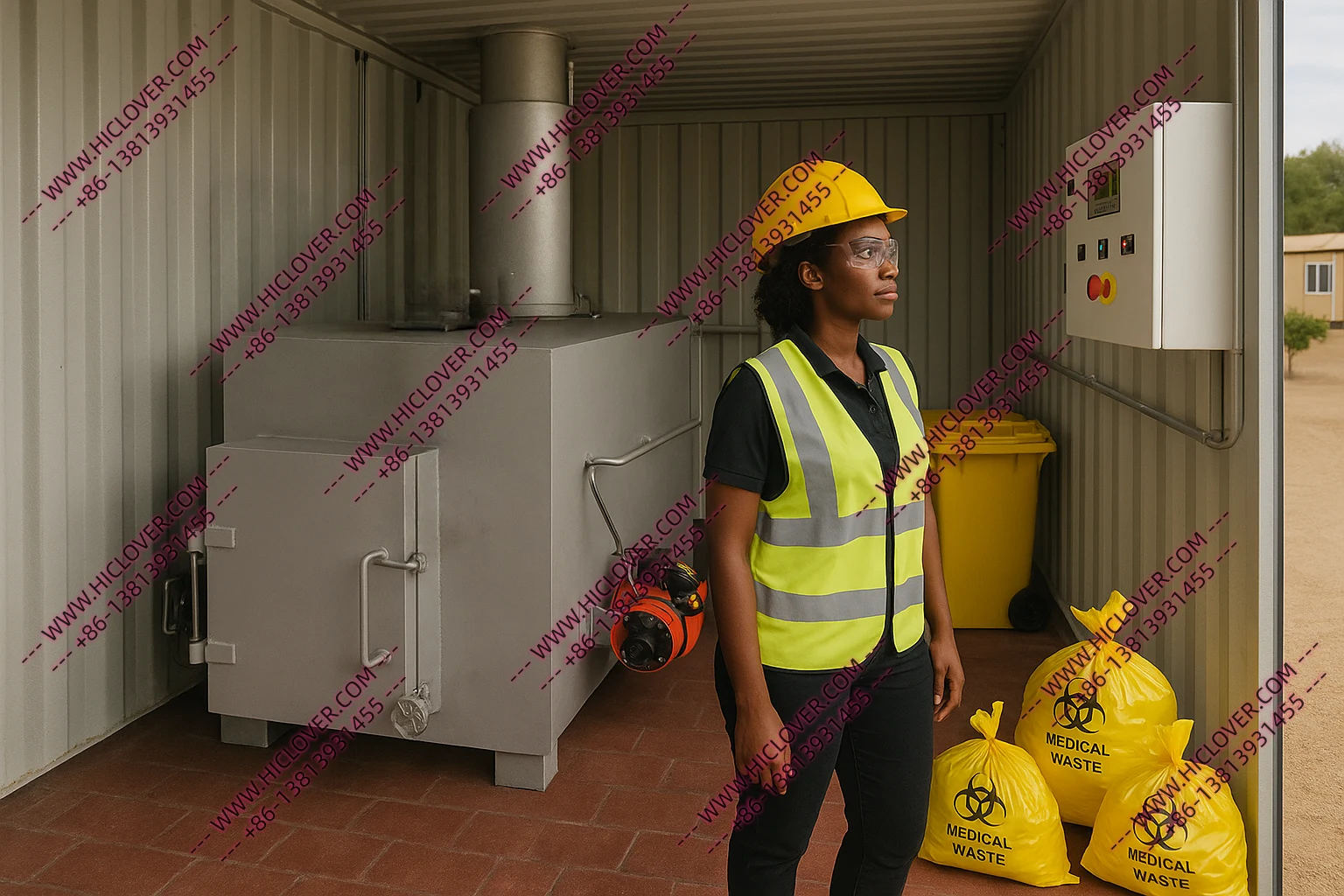
Container-Configured (Containerised) Incinerator Concept
A container-configured, or containerised, incinerator integrates the complete system into a standard shipping container (e.g., 20- or 40-foot). This architecture is well-suited to South Sudan because:
-
Rapid deployment and relocation
-
The complete system can be transported by truck to remote states or UN field locations without complex civil works.
-
Units can be repositioned as operational priorities shift (e.g., between UN bases or humanitarian hubs).
-
-
Self-contained infrastructure
-
Container housing provides weather protection, controlled access, and improved security.
-
Sensitive components (burners, control panel, fuel system) are protected from dust, vandalism, and harsh climate.
-
-
Simplified installation
-
Minimal on-site construction: basic foundation, fuel connection, and stack placement.
-
Particularly valuable in regions with limited contractors, materials, or stable power infrastructure.
-
-
Standardized design for UN and NGO projects
-
Container format aligns with the typical logistics of peacekeeping missions and humanitarian programs, enabling easier shipping, asset tracking, and redeployment across operations.
-
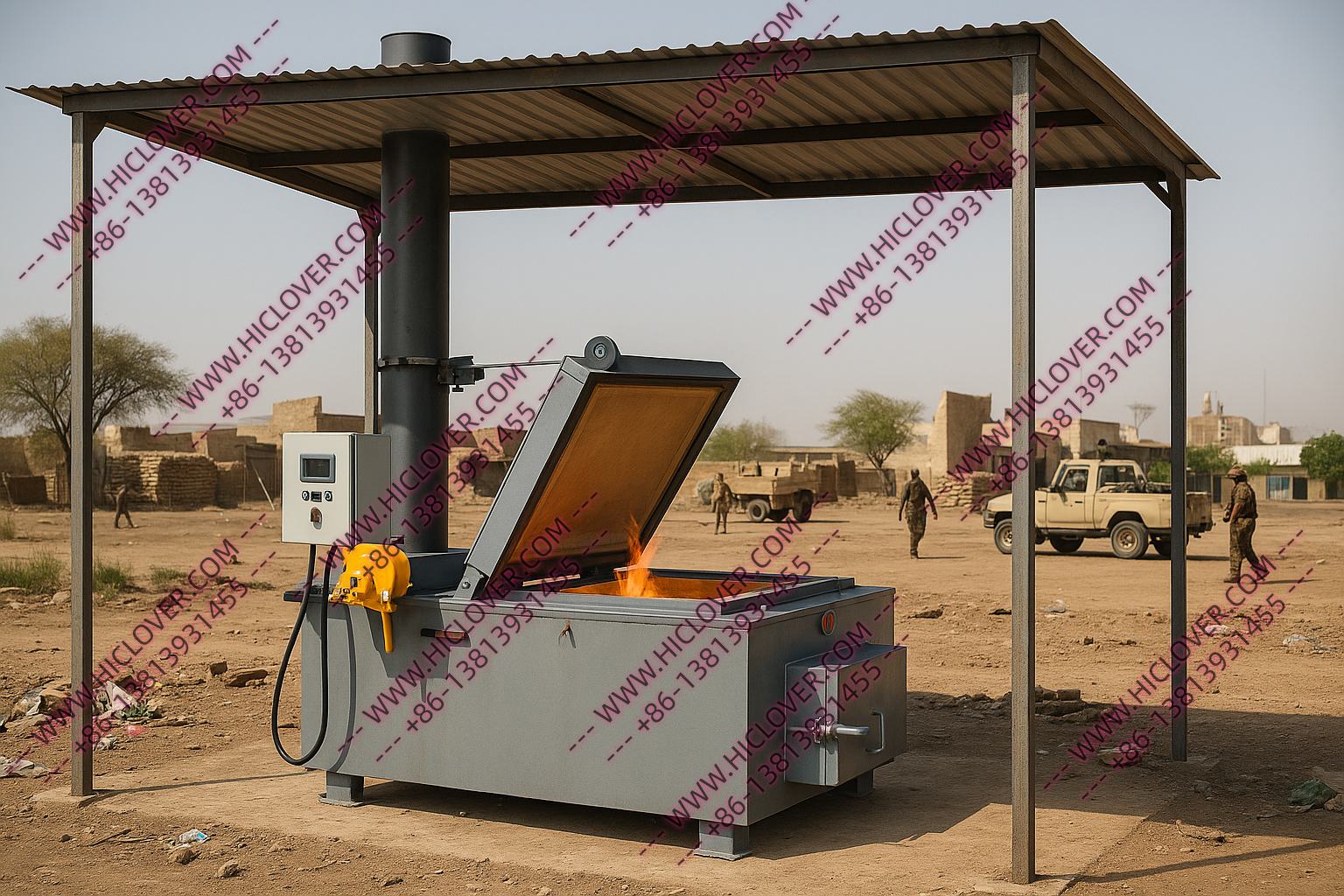
Top-Loading Door: Operational Advantages
For biological and clinical waste in South Sudan, a top-loading incinerator design provides several benefits:

-
Safe, gravity-assisted loading for bagged waste, boxes, and sharps containers, reducing operator exposure.
-
Efficient batch handling of mixed medical waste, including bulky items such as contaminated textiles or packaging.
-
Robust sealing of the loading door to minimize smoke leakage and improve combustion conditions.
In constrained or congested sites within UN compounds or hospital yards, top loading also simplifies waste handling: trolleys or bins can be tipped directly into the primary chamber with minimal manual contact.
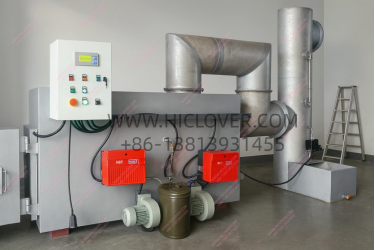
Recommended Models: HICLOVER TS200 and TS300
For South SudanCtype projects with 180C220 kg/h requirements, the following HICLOVER models are recommended:
-
HICLOVER TS200 (approx. 180C200 kg/h class)
-
Suitable for medium-size hospitals, regional laboratories, and UN field hospitals.
-
Delivers high-temperature combustion for safe destruction of biological samples and infectious clinical waste.
-
Container-configured option with integrated primary and secondary chambers, diesel fuel system, and control panel.
-
Top-loading primary chamber simplifies operation and reduces handling risk.
-
-
HICLOVER TS300 (up to around 220 kg/h class)
-
Targeted for central reference hospitals, Ministry of Health hubs, and large UN compounds with higher waste volumes.
-
Larger primary chamber and higher throughput capacity to manage consolidated biohazard waste streams from multiple facilities.
-
Available in containerised package with optional flue-gas treatment (e.g., dry or wet scrubber) to reduce emissions and odor.
-
Top-loading configuration supports high-volume batch loading while maintaining secure, closed-chamber operation.
-
Both TS200 and TS300 can be configured with:
-
Dual-chamber design (primary + high-temperature secondary chamber) for complete destruction of biohazardous gases and particulates.
-
Diesel-fired Italy-brand burners with precise temperature control, enabling consistent operation even in fluctuating ambient conditions.
-
Optional PLC-based control and data logging to support UN and donor reporting requirements on environmental performance.
Alignment with UN and National Priorities
Containerised, top-loading incinerators in the TS200/TS300 range directly support:
-
Implementation of South Sudan’s draft and evolving medical waste management policies and plans, which call for safe treatment of infectious waste and sharps.(World Bank)
-
UN environmental management standards for peacekeeping operations, including proper segregation, treatment, and disposal of hazardous healthcare waste within mission compounds.
-
Donor-funded health projects that must demonstrate robust infection-prevention and control (IPC) and environmental safeguards.
Given South Sudan’s fragile health infrastructure, high burden of infectious disease, and concentration of international agencies and UN missions, there is a clear and growing need for reliable, high-temperature incineration solutions for biohazardous waste. Container-configured, top-loading incinerators in the 180C220 kg/h range―specifically HICLOVER TS200 and TS300―offer a practical, mobile, and scalable answer.
These systems enable safe disposal of biological samples and infectious clinical waste, protect staff and communities from biohazard exposure, and help national authorities and UN partners meet their environmental and public-health obligations in one of the world’s most challenging operating environments.
2025-12-07/00:53:08
|
Incinerator Items/Model |
HICLOVER TS100(PLC)
|
|
Burn Rate (Average) |
100kg/hour |
|
Feed Capacity(Average) |
150kg/feeding |
|
Control Mode |
PLC Automatic |
|
Intelligent Sensor |
Continuously Feeding with Worker Protection |
|
High Temperature Retention(HTR) |
Yes (Adjustable) |
|
Intelligent Save Fuel Function |
Yes |
|
Primary Combustion Chamber |
1200Liters(1.2m3) |
|
Internal Dimensions |
120x100x100cm |
|
Secondary Chamber |
600L |
|
Smoke Filter Chamber |
Yes |
|
Feed Mode |
Manual |
|
Burner Type |
Italy Brand |
|
Temperature Monitor |
Yes |
|
Temperature Thermometer |
Corundum Probe Tube, 1400℃Rate. |
|
Temperature Protection |
Yes |
|
Automatic Cooling |
Yes |
|
Automatic False Alarm |
Yes |
|
Automatic Protection Operator(APO) |
Yes |
|
Time Setting |
Yes |
|
Progress Display Bar |
3.7 in” LCD Screen |
|
Oil Tank |
200L |
|
Chimney Type |
Stainless Steel 304 |
|
1st. Chamber Temperature |
800℃–1000℃ |
|
2nd. Chamber Temperature |
1000℃-1300℃ |
|
Residency Time |
2.0 Sec. |
|
Gross Weight |
7000kg |
|
External Dimensions |
270x170x190cm(Incinerator Main Body) |
|
Burner operation |
Automatic On/Off |
|
Dry Scrubber |
Optional |
|
Wet Scrubber |
Optional |
|
Top Loading Door |
Optional |
|
Asbestos Mercury Material |
None |
|
Heat Heart Technology(HHT) |
Optional |
|
Dual Fuel Type(Oil&Gas) |
Optional |
|
Dual Control Mode(Manual/Automatic) |
Optional |
|
Temperature Record |
Optional |
|
Enhanced Temperature Thermometer |
Optional |
|
Incinerator Operator PPE Kits |
Optional |
|
Backup Spare Parts Kits |
Optional |
|
Mobile Type |
Optional:Containerized/Trailer/Sledge Optional |